Peggle Blast: A Pocket-Sized Shot of Pure Joy
If you've ever wished a pinball machine could giggle, shower you in confetti, and gently pat you on the back, Peggle Blast is that machine. It's a casual puzzle game where you take aim, fire a ball, and watch chaos transform into calculated triumph. Developed by Electronic Arts (EA) in partnership with PopCap, the studio behind Bejeweled and Plants vs. Zombies, this mobile iteration of the beloved Peggle series strips away the clutter and hands you pure, colorful physics-based satisfaction.
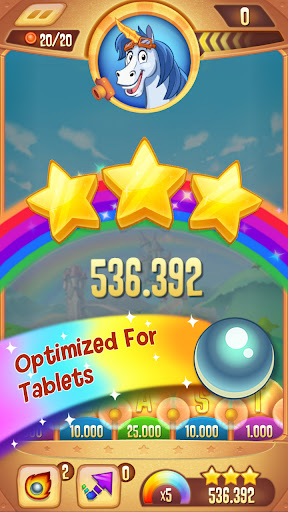
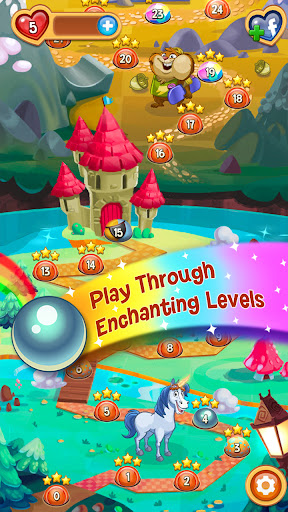
Core highlights: a dopamine-soaked “free ball” recovery system, a power-up roster that turns near-misses into victories, a level-based campaign with progressive difficulty, and a “party mode” that lets you challenge friends' high scores. Target audience: anyone with a spare five minutes and a craving for light strategy—from commuters to casual gamers who avoid competitive stress like the plague.
The “One More Peg” Trap: Session Design That Respects Your Clock
Here's where Peggle Blast quietly outsmarts its peers. Many casual games use artificial gates—energy bars, timers, or “come back in 3 hours” mechanics—to pad session length. Peggle Blast instead uses what I call the “one-shot tease.” Each level takes roughly 60 to 90 seconds to clear, but the structure nudges you into a rhythm of “just one more try” without ever yelling at you to stay.
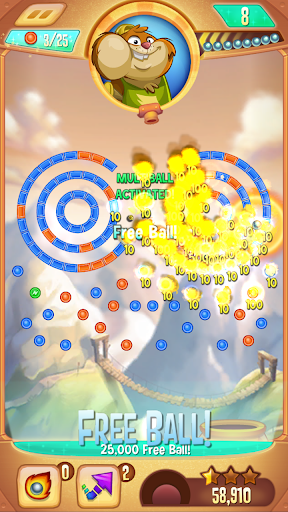
The clever part is in its failure state. When you miss the last peg, you don't get a harsh “game over.” Instead, the screen shimmers, and you're offered a “free ball” for watching a short ad or spending a token you've accumulated through play. That offer is a psychological masterstroke—it converts frustration into agency. You never feel cheated; you feel like you chose to continue. Sessions naturally stretch to 10–15 minutes, but you'll leave because you decided to, not because the app kicked you out. In user experience terms, this is “frictionless onboarding”—you learn the rules by playing, not by reading a tutorial. The first five levels teach you aim, bounce angles, and power-ups through pure trial-and-error, with no text boxes interrupting the flow.
Frictionless From the First Tap: Onboarding That Feels Like Play
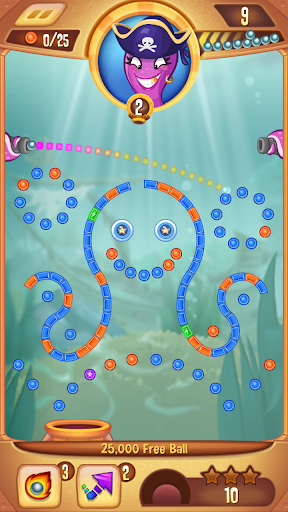
I'm a sucker for apps that assume I'm smart. Peggle Blast's onboarding doesn't hand you a manual; it hands you a ball and says, “Go poke those blue pegs.” Within three seconds, you're bouncing a ball off walls, watching it ricochet, and feeling a small rush when a peg lights up. The tutorial is embedded—a faint pulsing arrow shows you where to aim, but you're free to ignore it and experiment.
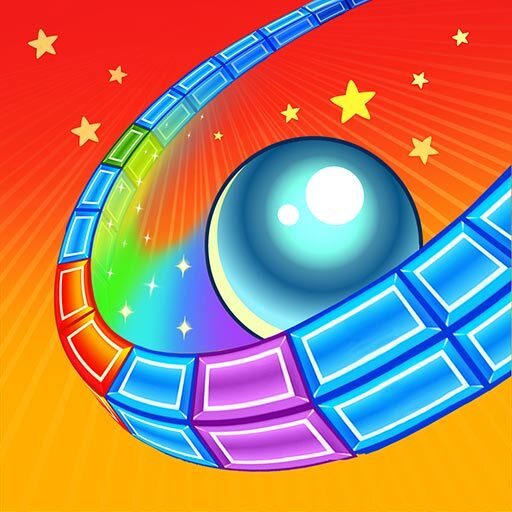
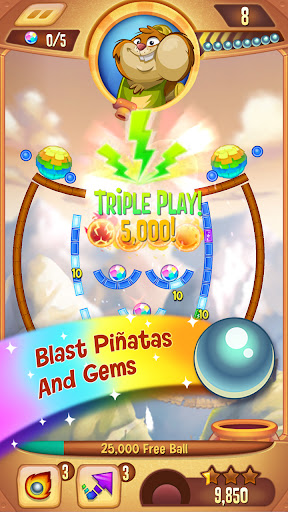
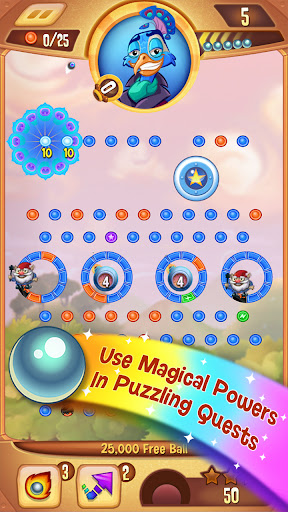
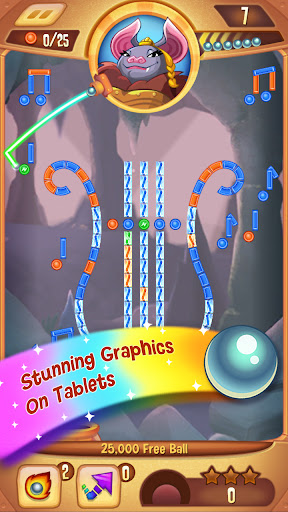
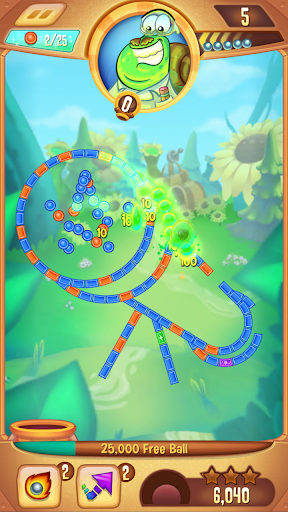
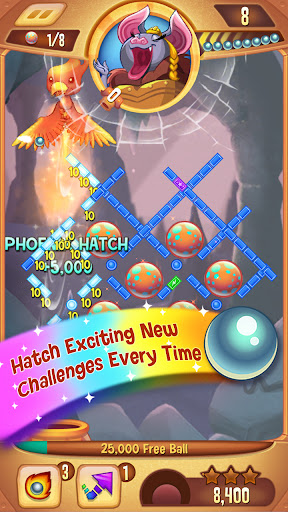
The interface echoes this minimalism. Bottom center: a single launch button. Bottom left: your power-up icons (which activate only when you've charged them by hitting specific green pegs). Top right: a pause menu. No clutter, no shop icon screaming for your credit card. The color palette is pastel candy—pink, mint, lemon—against a soft gradient background. The musical score is a xylophone-and-harp lullaby that swells when you hit a combo. Animations are buttery at 60fps, even on older phones, which matters because a single dropped frame ruins the timing of a skilled shot.
The learning curve is a gentle slope, not a cliff. Levels 1–20 introduce one new mechanic at a time: first, blue pegs (must clear them), then purple pegs (special effects), then moving pegs. By level 20, you're juggling three power-ups simultaneously, but it feels like you discovered them naturally, not like the game dumped a spreadsheet on you.
Special Powers, Unfairly Fun: The “Free Ball” and “Multiplier Frenzy”
If I have to pick the two features that make Peggle Blast a standout, it's these.
The Free Ball Recovery System. Most peg-clearing games punish a near-miss by ending your turn. Peggle Blast gives you a lifeline—a sphere that drops from the apex of the screen, bouncing wherever physics takes it. You don't control it, which sounds unfair, but it lands on a peg ~70% of the time, effectively giving you a second chance that feels less like a handout and more like a lucky jackpot. The catch: it only appears when you have zero pegs left and at least one ball in reserve. This creates a delicious tension—do you use your free ball now, or save it for the boss level?
Multiplier Frenzy. Hit three consecutive green pegs, and the screen lights up with a “FRENZY!” logo, doubling your score for five seconds. During this window, every peg you pop adds to a chain multiplier (x2, x4, x8…). The catch? The frenzy resets if you miss a shot. This transforms the game from casual aim-and-hope into a precise timing exercise when the frenzy is active. You'll angle your shot to hit a green peg first, then rapidly fire at clustered blues to milk the multiplier. It's a tiny risk-reward loop that keeps you leaning forward, even in casual mode.
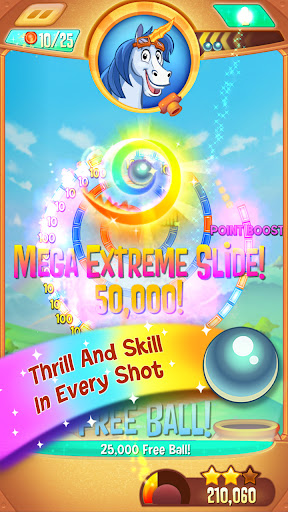
What sets this apart from, say, Ballz or Stacky Bird is the emotional texture. Ballz is pure math; Peggle Blast is theater. When you hit a 30x multiplier, the screen shakes, the ball leaves a rainbow trail, and the pegs burst into a shower of stars. It's not subtle, but it's earned. The differentiation is in how the game respects your time—no forced ads, no energy system collapsing mid-streak. You pay for the free ball with a 15-second ad only when you choose, and the in-app purchases for extra balls (starting at $1.99) are entirely optional; I finished the first 40 levels without ever buying one.
Verdict: A Pocket-Sized Gem for Busy Lives
I'll be honest: Peggle Blast is the best casual game I've played this year—not because it reinvents the wheel, but because it makes the wheel spin with actual joy. It's perfect for waiting rooms, bus rides, or the post-lunch brain fog. Recommended for anyone who enjoys Threes!, Two Dots, or even old-school Peggle fans who found the desktop version too slow-paced.
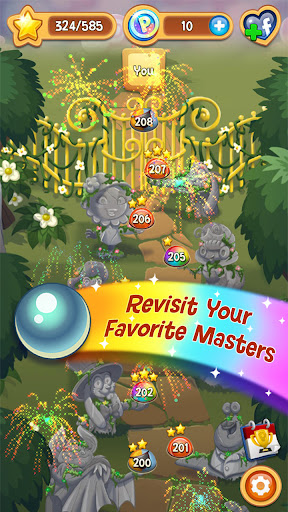
Use it this way: keep it as your “wind-down” app. Play five levels when you want to decompress, not when you're multitasking. And if you're a completionist, the daily challenges (which rotate every 24 hours) provide a light grind without feeling like a job. Avoid it only if you dislike games that rely on physics luck—but honestly, that randomness is half the charm.
Rating: 8.7/10—subtracted a point for the occasional overlong ad when you opt for the free ball, and another 0.3 for not having cloud saves across devices. Otherwise, this is a near-perfect pocket companion.